
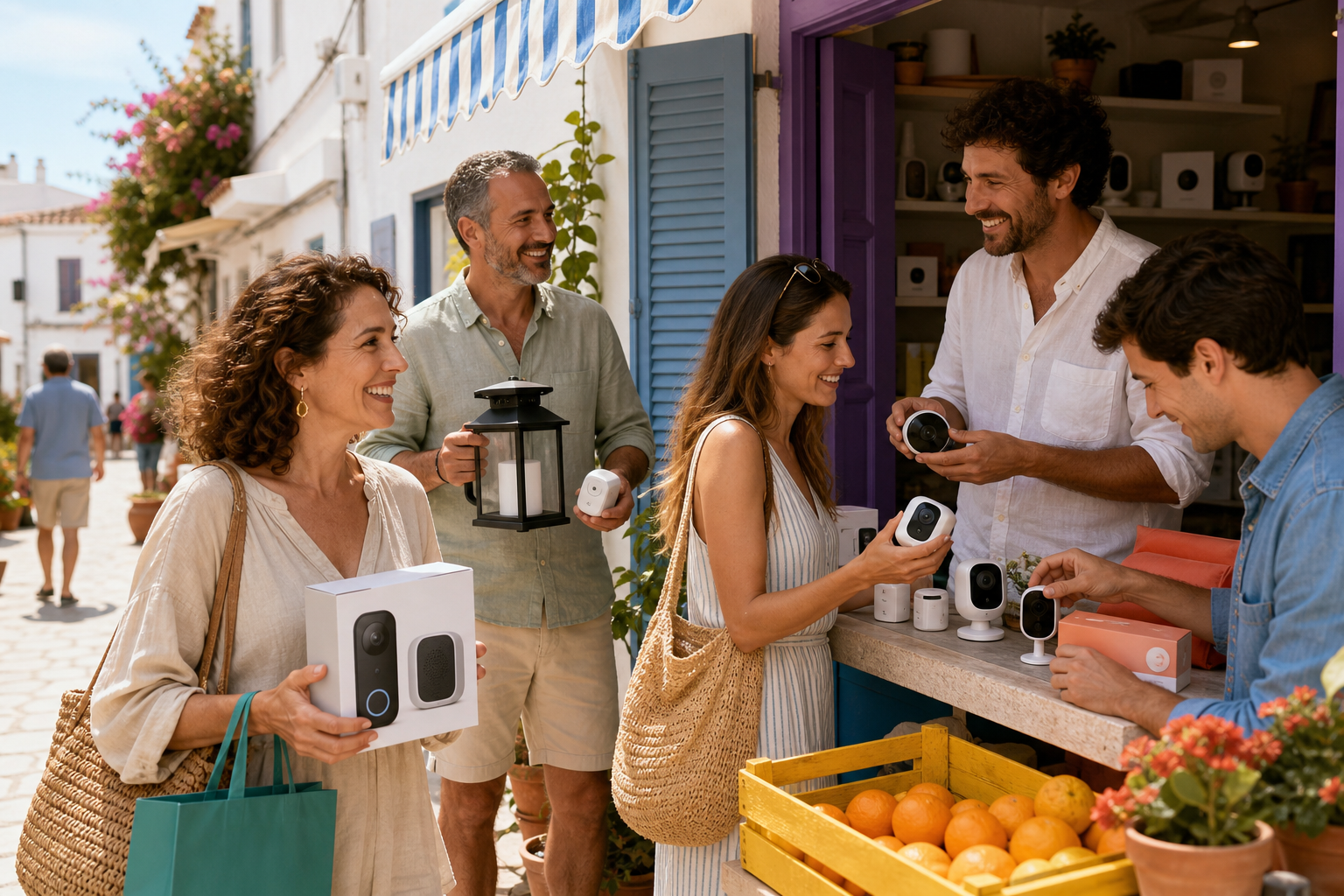
Southern Spain does not buy videovigilance for one reason.
It buys when heat, tourism, movement, assets, and reputation all matter at once. That is the real sales opportunity: not cameras, but operational calm, control, and business continuity.
Andalusia closed 2025 with 37.9 million visitors, more than €30 billion in tourism revenue, and tourist arrivals in 775 municipalities. Forty-nine towns welcomed international tourism for the first time.
Start with the local context
Andalusia is not one market.
It includes:
- Coastal tourism zones with high staff and customer turnover
- Small inland towns where security must stay simple and visible
- Mixed environments like hotels, retail, logistics, apartment blocks, parking lots, and second homes
The regional government also says tourism has expanded into inland, rural, and non-traditional areas. So videovigilance is no longer just a hotel topic.
Sell use cases, not hardware
The biggest mistake is starting with resolution, lenses, cloud storage, or recorders.
Start with business questions instead:
- Can you stop theft in the warehouse or on the terrace?
- Can you reduce incidents with customers or suppliers?
- Can you monitor access after hours?
- Can you protect vehicles, stock, or machinery?
- Can you manage multiple sites or rentals more easily?
If you sell a hotel, beach bar, winery, apartment block, or retail chain, the value is not “a 4K camera”.
The value is less loss, more control, and evidence when something goes wrong.
Messages that work in Andalusia
1. Visible security without friction
Busy businesses need systems that do not disrupt the customer experience.
That means:
- discreet installation
- quick access to recordings
- clear alerts
- simple maintenance
- nearby support
2. Protect the business and the reputation
In tourism and hospitality, one bad incident can become a review, a complaint, or a trust problem.
So videovigilance should be sold as a way to resolve disputes with evidence and improve response times.
The AEPD also reminds businesses that CCTV processes personal data and must follow GDPR.
3. Compliance without fear
Many buyers worry about getting privacy wrong.
That is where clear communication helps. The system should follow minimization, information, and proportionality rules.
The AEPD says CCTV should only be used when less invasive options will not work, should not capture public roads except in strict cases, and is forbidden in bathrooms, changing rooms, and similar spaces.
Focus on the right sectors
Start where the pain is real and decisions move fast:
Hospitality and tourism
Use the security story for entrances, terraces, cash points, storage areas, and parking.
Apartment blocks and second homes
The message is simple: access control, garages, common areas, and perimeters.
Retail and local businesses
These buyers want fewer losses and solid proof when incidents happen.
Logistics, warehouses, and industrial sites
Here the focus is perimeters, loading docks, staff entrances, and night shifts.
What not to promise
Avoid these three traps:
- “It is fully legal without checking anything.”
- “Just record everything to stay safe.”
- “One setup works for every business.”
A hotel, a residential building, and a warehouse face very different risks.
The winning angle
In southern Spain, videovigilance sells best when you stop talking about cameras and start talking about control, continuity, evidence, and peace of mind.
If you want better results, start with one clear segment, translate its risk into business value, and show how your solution respects both operations and privacy.


